Science - Eva Varga - Page 4


February 3, 20161

Wow! I am in awe of all the wonderful posts that were shared in last week’s Finishing Strong link-up. It was so difficult to narrow my choices down to just three to highlight.

I am delighted that families homeschooling middle and high school age students are coming together and finding inspiration in one another. That’s has been the goal of Finishing Strong since its inception. Thank you!!

Finishing Strong #74 @EvaVarga.net

Each Wednesday, moms just like you share their best tips, encouragement, advice, and more for teaching older kids at home. Finishing Strong is hosted by me here at EvaVarga along with my friends – Heather from Blog She Wrote, Megan and Susan from Education Possible, and Heidi from Starts at Eight.

Finishing Strong Favorites

Each week, the post shared that received the most clicks is featured on all four host blogs. Here’s the most popular post from last week:

What I Wish Someone Had Told Me

What I Wish Someone Told Me Before I Started Homeschooling High School by Heidi at Starts at Eight

When choosing posts to highlight, I look for posts that are inspiring to me as a homeschool mom with two kids in middle school. I just love that so many of the posts this past week focused on science. As you know, science is my favorite subject. Even so, it is one of the subjects that gets pushed aside in our homeschool when life gets busy.

Here are three posts I enjoyed reading last week. I’ve annotated each to give you a peak into what I liked about each of the three I selected.

What I Wish Someone Had Told Me

I found it humorous that Claire at Angelicscalliwags warns us that her post, Human Biology: Reproduction, may be considered revolting. I encountered the same reactions from my students when we were engaged in our study of human anatomy. Due to time constraints, however, we didn’t cover the reproductive system. It is for this reason that I chose to highlight Claire’s post. I love the hands-on approach!
What I Wish Someone Had Told Me

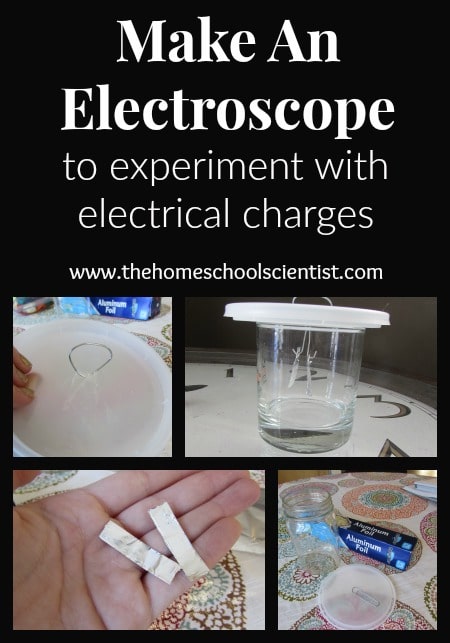
Another favorite post this week is from Marci at The Homeschool Scientist who shares with us the steps to Make An Electroscope to Experiment with Electrical Charges. How can we tell if an object contains electrically charged atoms? Read on to learn how to create a testing device with simple materials you have at home.

What I Wish Someone Had Told Me

Adult skills as we refer to them in our home have always been a fun component of our homeschool. Kris, who blogs at Weird, Unsocialized Homeschoolers, shares a wonderful list of 10 Home Ec Skills Your Kids Need to Know. As she says, “There are many things on this list that I have neglected  and need to focus on during my kids’ last few years at home.”

Thank you for helping us to make Finishing Strong a key resource for families who are homeschooling through the middle & high school years.

What are you going to share with us this week?

Guidelines:

  1. Link up to 3 posts from your blog. Make sure you use the exact URL to the post, not to your home page. You can add any post related to homeschooling middle and high school students. Posts unrelated to that will be removed.
  2. Please no advertising, individual Pinterest pins, Facebook, Twitter, or other link-up links!
  3. Grab our button to add to your post after you link it up. Each week we will be choosing our favorite posts to highlight on all 4 sites. If you were featured, we would love for you to use the “I was featured” button.
  4. The linky will go live on each co-host’s blog each Wednesday at 6am EST, and will be live until Tuesday at 11:55 pm.

Please Share!

Add our button to your post.

Homeschooling the Middle & High School Years

Were You Featured?

Grab an “I was featured” button!

Homeschooling the Middle & High School Years

Bloggers, by linking up, you may be featured on our co-hosts’ social media pages or our Pinterest board. We may even select you to be featured in a future post!


December 28, 2015

It is hard to believe that 2015 is nearing an end, this year just seemed to fly by. As I prepare to turn the calendar page I thought it would be fun to share the posts that were reader favorites from this past year. I’ve made some annotations about each of the posts so that if you missed a post, you can catch the summary and jump over if you would like to read more.

Reader Favorites from 2015 @EvaVarga.netSome of these posts were not actually published in 2015, but they are reader all time favorites showing up on this year’s list. It is not surprising to me that many are from STEM Club, the homeschool science co-op I have directed the past three years.

Free Science Curriculum for Middle School I understand that budgets are tight and we have to make tough decisions about what extra-curriculars and curriculum we can afford. The best things in life are indeed free so in this post I have compiled a list of free science curriculum specifically for middle school.

modeling plate tectonicsSTEM Club: Plate Tectonics The theory of plate tectonics was first suggested by Alfred Wegener in 1915. It wasn’t widely accepted however until the 1970s as new information was obtained about the nature of the ocean floor, Earth’s magnetism, the distribution of volcanoes and earthquakes, the flow of heat from Earth’s interior, and the worldwide distribution of plant and animal fossils. This simple activity allow students to model each of the different types of interactions at plate boundaries.

STEM Club: Introduction to Body Systems  At the middle school level, students should begin to view the body as a system, in which parts do things for other parts and for the organism as a whole. I thereby developed this unit for students to understand that there are different systems within the body and that they work independently and together to form a functioning human body.

Autobiography Maps: Our Life as an Island  Creating an autobiography map is a wonderful activity with which to get to know students better. It is especially great at the beginning of the year.  They began by brainstorming important things that have happened during their lives, items or activities that represent them currently, and goals that they have for the future.

bromoblueSTEM Club: The Respiratory System The most popular and well received lesson in the Human Body Systems unit were those related to the respiratory system. I had several stations set up around the room and the kids loved each of the quick demonstrations in which they took part.

Building Toothpick Bridges: A Lesson Plan We have had an opportunity to build toothpick bridges a couple times and it is always a fun and challenging experience. This post describes our first foray into learning about bridge engineering. You might also be interested in learning more about Joseph Strauss, the engineer who designed San Francisco’s Golden Gate Bridge.

STEM Club: Scientific Classification and Dichotomous Keys Whenever I begin a life science unit, I begin with a review of scientific classification and how to use a dichotomous key. In this post I provide a couple of free printables you can use with your own students.

genealogy with kidsGenealogy With Kids Digging into the family tree gives kids a sense of connection within their families, as well as a sense of general history. It also can provide a context for understanding complex issues, such as war and immigration. Exploring genealogy together offers a practical benefit for adults as well. I share a variety of ways in which to integrate genealogy activities into your homeschool curriculum beginning with the youngest of learners.

How to Teach Middle School Science  I realize that not everyone feels comfortable teaching science – especially utilizing a hands-on approach. I have thereby compiled advice from homeschool experts – homeschool parents just like you and I – who have been teaching our own children for a number of years. They share their wisdom and advice for teaching science at home.

Introduction to Orienteering @EvaVarga.netOrienteering for Kids We love the sport of Orienteering which originated in Sweden. It is an exciting adventure sport that will get your kids running – and provides lots of great learning opportunities for homeschooling. It combines athleticism with geography, math, science, and technology.

What was your favorite post this past year? Share in the comments. 🙂


November 10, 20151

Last year, for the first time, we took part in Physics Quest, a story-based activity that aims to teach middle school students physics concepts and give them a positive experience with physics. When the kit arrived, we jumped right in!

Physics Quest: Hands-on Physics for Middle School @EvaVarga.net

Physics Quest began as a World Year of Physics 2005 project with a kit based on Albert Einstein. The American Physical Society (APS) sent out nearly 10,000 free kits that year, to classes across the country. Teacher feedback from the initial PhysicsQuest indicated that it successfully met a need for fun and accessible physics material at the middle school level, therefore APS decided to continue the program.

Spectra: High Intensity

In celebration of the International Year of Light, the 2015 kit, Spectra: High Intensity, provided the equipment needed to teach students about bending light, spherical lenses, how color and energy are related, and how the sun’s light also carries heat. We spent an entire day reading the story and exploring these physics concepts.

In Spectra: High Intensity, the storyline begins with the students learning that Miss Alignment had broken out of jail and was on the loose hatching evil plans. “Armed with a high IQ, an inferiority complex, and a secret lair, she will try yet again to control the town.”

Working together as a team, my kiddos completed the activities outlined in the book. In doing so, they applied the skills they need to help Spectra and her gang prevent Miss Alignment’s attempted town domination. It was great fun and the hands-on activities were perfectly designed for their age.


Physics Quest: Hands-on Physics for Middle School @EvaVarga.net


Sign Up Today

APS  provides a free Physics Quest kit to registered 6-9th grade physical science classes, home school groups, science clubs, and after-school programs. The kit includes a user’s manual and materials for four physics experiments. This program focuses on middle school students because these grades have been identified as the point when many students lose interest in math and science.

Registration is now open for the 2016 PhysicsQuest, Spectra’s Current Crisis.


September 3, 2015

In a series of posts this week, I will be sharing 5 Misconceptions in Science and providing lessons and activities to help dispel these conceptual misunderstandings. Today’s post focuses on common misconceptions in chemistry and physics.

Misconceptions in Chemistry @EvaVarga.net

Identifying & Dispelling Misconceptions

The first step in dispelling misconceptions is to identify them and to recognize their sources. To identify misconceptions, homeschool parents and teachers can:

  • use open-ended questions to assess what students know about the topic of a lesson.
  • listen and observe students’ answers
  • use direct questioning to discover the students’ reasoning process

Simply correcting a mistaken impression through discussion,  however, may not work. Instead, provide an opportunity for students to test out their theories. This is not only more convincing but develops their scientific reasoning skills.

  • First, help students to verbalize their understanding and thereby formulate a theory.
  • Secondly, guide them to set up an experiment to test their theory.

By using inquiry to test misconceptions, teachers can also foster respect for people, ideas, and scientific inquiry. Teachers can use misconceptions to provide unique opportunities to practice science process skills and interest students in scientific exploration.

Misconceptions in Chemistry & Physics

MISCONCEPTION #4

Comparing and contrasting physical and chemical changes, students may believe that because physical changes are often reversible, chemical changes are irreversible.

Many chemical reactions are NON-REVERSIBLE CHANGES .You cannot turn a baked cake back into its raw ingredients. Some chemical reactions can be reversed, and re-formed into the original substances. These are REVERSIBLE CHANGES.

A reversible change is a change that can be undone or reversed. Sometimes we also call these physical changes. A reversible change might change how a substance looks or feels (changing the physical appearance), and it is easy to turn it back again, but it doesn’t produce new substances.

For example, to demonstrate a reversible chemical change: Dip a heat-sensitive baby spoon and other objects that might change color into a beaker of hot water. Ask students to record their observations or results.

Students might notice that a baby spoon turned white when it was dipped in hot water and returned to its original color as it cooled. Ask students questions that will help them evaluate the results and draw new conclusions: “Did the baby spoon undergo a reversible chemical change?”

5 Misconceptions in Science & How to Dispel Them @EvaVarga.net

Misconceptions in Science & How to Dispel Them (series introduction)

Misconceptions in Astronomy 

Misconceptions in Geology & Meteorology

Misconceptions in Biology (coming Friday)

You might also be interested in my travel hopscotch,  Discovering Peru, where you’ll have the chance to win a travel guide of choice from DK Publishing.

My post is one of many hopscotch link-ups. Hop over and see what others are sharing.

Hopcotch2015


September 2, 2015

In a series of posts this week, I will be sharing 5 Misconceptions in Science and providing lessons and activities to help dispel these conceptual misunderstandings. Today’s post focuses on common misconceptions in geology and meteorology. I’ve selected to highlight just a few.

Misconceptions in Geology @EvaVarga.net

Common Sources of Misconceptions

You may be asking yourself, how do misconceptions take root in the first place? Misconceptions are formed by a variety of contributing factors.

  • Everyday language can cause misconceptions. For example, students may have seen their parents buy or administer “plant food” and so believe that plants need food to grow.
  • Lack of evidence leads students to form mistaken conclusions. Because students cannot see germs or microscopic organic materials without a microscope, they may not grasp the concept.
  • Word of mouth, the media, and speculation all spread misconceptions.
  • Confusion over concepts can create wrong impressions.

Misconceptions in Geology & Meteorology

MISCONCEPTION #3

The greenhouse effect is caused when gasses in the atmosphere behave as a blanket and trap radiation which is then re-radiated to the earth.

First let me clarify that the greenhouse effect and global warming are NOT the same thing. The greenhouse effect is the name applied to the process which causes the surface of the Earth to be warmer than it would have been in the absence of an atmosphere. Global warming is the name given to an expected increase in the magnitude of the greenhouse effect, whereby the surface of the Earth will amost inevitably become hotter than it is now.

I will be discussing the greenhouse effect in this post – not global warming.

The fact that Earth has an average surface temperature comfortably between the boiling point and freezing point of water, and thus is suitable for our sort of life, cannot be explained by simply suggesting that our planet orbits at just the right distance from the sun to absorb just the right amount of solar radiation.

Parts of our atmosphere act as an insulating blanket of just the right thickness, trapping sufficient solar energy to keep the global average temperature in a pleasant range. This ‘blanket’ is a collection of atmospheric gases called ‘greenhouse gases’ based on the idea that the gases also ‘trap’ heat similarly to the glass walls of a greenhouse.

These gases, mainly water vapor ( ), carbon dioxide (), methane (), and nitrous oxide (), all act as effective global insulators. To understand why, it’s important to understand a few basic facts about solar radiation and the structure of atmospheric gases.

The following activities will help your students better understand the concepts described above.

What is a Greenhouse?

What Factors Impact a Greenhouse?

5 Misconceptions in Science & How to Dispel Them @EvaVarga.net

Misconceptions in Science & How to Dispel Them

Misconceptions in Astronomy

Misconceptions in Chemistry & Physics 

Misconceptions in Biology

You might also be interested in my travel hopscotch,  Discovering Peru, where you’ll have the chance to win a travel guide of choice from DK Publishing.

My post is one of many hopscotch link-ups. Hop over and see what others are sharing.

Hopcotch2015


September 1, 2015

In a series of posts this week, I will be sharing 5 Misconceptions in Science and providing lessons and activities to help dispel these conceptual misunderstandings. Today’s post focuses on common misconceptions in astronomy.

Misconceptions in Astronomy @EvaVarga.netMisconceptions in Astronomy

Misconceptions creep into the science of astronomy perhaps more than any other science. Surveys have found that even college graduates carry persistent misconceptions or even wildly incorrect ideas about the phases of the moon or the cause of the seasons.

Considering the following statements, which are true? Which are false?


1) The sky is blue because it reflects the blue color of the oceans.
2) The seasons are caused by the Earth’s distance from the sun.
3) The Moon’s phases are due to the shadow of the Earth falling on the Moon.
4) The bright glow of a meteor is not caused by friction as it passes through the Earth’s atmosphere.
5) There are no stars seen in Apollo Moon-landing pictures thus proving that these landings were staged.
6) The Hubble Space Telescope is bigger than all Earth-based telescopes.
7) Stars in the night sky do have color.
8) The Moon is bigger near the horizon than when it’s overhead.
9) In the southern hemisphere, winters are much warmer than those in the northern hemisphere.
10) X-rays are emitted from the eclipsed sun but these X-rays do not damage your eyes if you look at the eclipsed sun.

How to Dispel Misconceptions

To help foster the replacement of misconceptions with new concepts, students should be encouraged to ask questions. Additionally, they should be given ample opportunity to engage in hands-on experiments or demonstrations designed to test hypotheses.

Carefully selected demonstrations are one way of helping students overcome misconceptions, and there are a variety of resources available. Let’s take the second statement above and explore how we can dispel this common misunderstanding.

MISCONCEPTION #2

The seasons are caused by the Earth’s distance from the sun.

Studies have shown that as many as 95% of people— including most college graduates—incorrectly believe that the seasons result from the Earth moving closer to or farther from the Sun. In reality, the answer lies in the tilt of the Earth’s rotational axis away or toward the Sun as the Earth travels through its year-long orbit. Distance plays no role since the Earth actually is closest to the Sun during the first week of January.

This video embedded below uses a globe and a strip of thermochromic paper to show how the axial tilt of the Earth as it orbits the sun produces the changing season. This is an excellent hands-on activity in which to engage your students to dispel this commonly held misconception.

To further investigate this common misconception in astronomy, check out National Geographic’s lesson The Reason for the Seasons.

Using demonstrations is a great tool to help dispel misconceptions. Be careful, however, to choose models and demonstrations that do do not mislead or strengthen other misconceptions. A popular model of the solar system that shows the relative distances of the planets from the sun, shows the planets all rotating around the sun on the same plane rather than on independent three-dimensional paths.

5 Misconceptions in Science & How to Dispel Them @EvaVarga.net

Misconceptions in Science & How to Dispel Them (series introduction)

Misconceptions in Geology & Meteorology (coming Wednesday)

Misconceptions in Chemistry & Physics (coming Thursday)

Misconceptions in Biology (coming Friday)

You might also be interested in my 5 day series,  Discovering Peru, where you’ll have the chance to win a travel guide of choice from DK Publishing.

My post is one of many hopscotch link-ups. Hop over and see what others are sharing.

Hopcotch2015Statements 4, 7, and 10 are true.  Statements 1, 2, 3, 5, 6, 8, and 9 are false.